
Mobility equipment can make a significant difference in how people manage daily activities, maintain independence, and participate in their communities. However, choosing the right personal mobility aid requires more than comparing prices or selecting a popular model. Every individual has different physical abilities, lifestyle requirements, and environmental challenges that influence which equipment will provide the greatest benefit.
A PMA (personal mobility aid) should support comfortable movement while addressing specific mobility limitations. Understanding the available options and evaluating personal needs carefully can help individuals make informed decisions that improve their quality of life.
Understanding Individual Mobility Requirements
The first step in selecting mobility equipment is identifying the user’s physical capabilities and daily movement requirements. Some individuals experience occasional difficulty walking long distances, while others require continuous assistance with mobility.
Factors such as balance, muscle strength, joint flexibility, and endurance influence equipment selection. Someone who can walk short distances but becomes tired easily may benefit from a mobility scooter. Meanwhile, an individual with limited lower body strength might require an electric wheelchair for consistent support.
Talking to a doctor or occupational therapist can help a person figure out what equipment is best for their physical condition and functional needs.
Exploring Different Types of Personal Mobility Aids
Personal mobility aids are available in several designs, each intended to address particular movement challenges. Understanding these differences helps users avoid purchasing equipment that does not meet their requirements.
Manual wheelchairs are suitable for individuals who can propel themselves or have assistance from caregivers. Electric wheelchairs provide powered movement and are often appropriate for people who require additional support throughout the day.
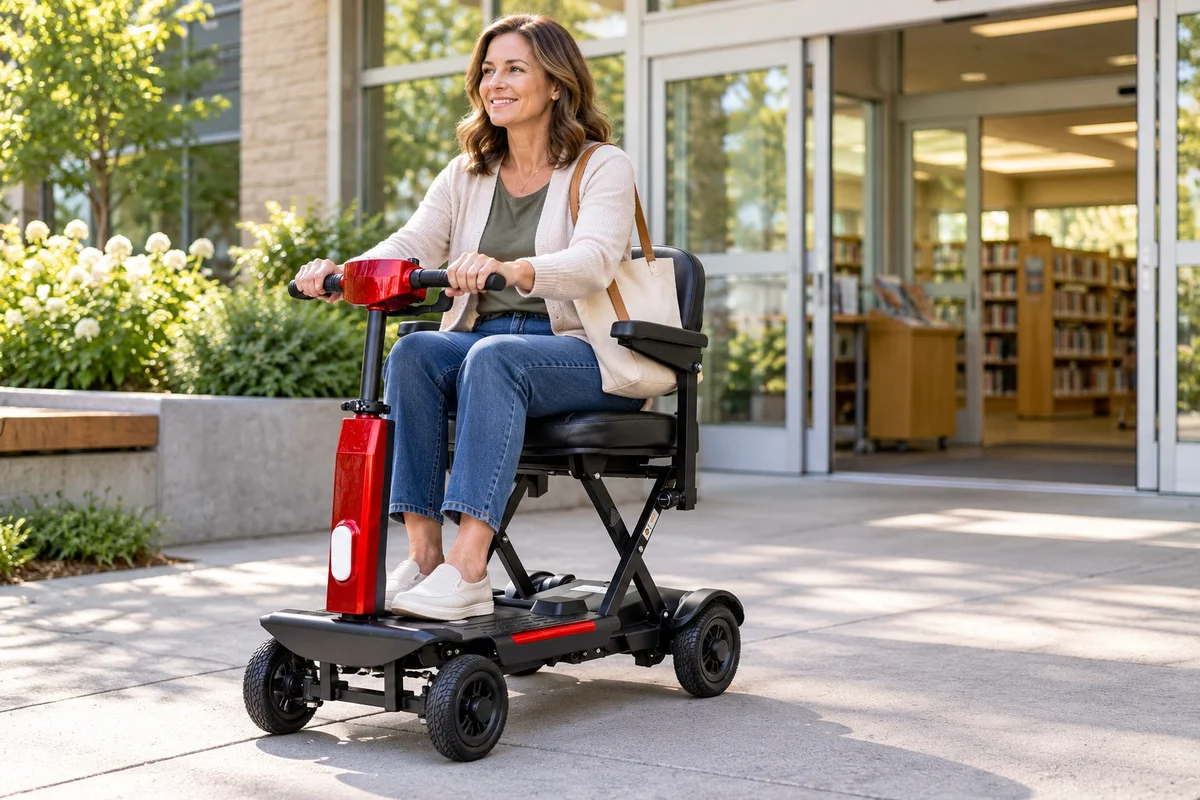
Mobility scooters generally accommodate individuals who can sit upright, operate handlebars, and transfer safely onto the seat. Their design makes them particularly useful for shopping, recreational outings, and travelling longer distances.
Providers such as ELFIGO offer mobility equipment designed for different user preferences, allowing individuals to explore options based on comfort, portability, and intended use.
Evaluating Comfort and Seating Support
Comfort should be a major consideration when selecting mobility equipment, particularly for individuals who spend several hours seated.
Seat width, cushioning, backrest support, and armrest positioning all contribute to the overall experience. Poor seating arrangements may cause discomfort, pressure buildup, or unnecessary strain during extended use.
Adjustable seating components can help accommodate individual body proportions and positioning needs. Users should also consider whether the equipment provides sufficient legroom and allows comfortable entry and exit.
Whenever possible, testing different models before purchasing can reveal important comfort differences that may not be obvious from product descriptions.
Considering Indoor and Outdoor Accessibility
The environment where mobility equipment will be used plays an important role in determining the most suitable design.
Indoor mobility often requires compact equipment with a tight turning radius. Narrow doorways, elevators, furniture arrangements, and limited storage areas can create difficulties for larger devices.
Outdoor environments introduce additional considerations, including uneven surfaces, slopes, pavement conditions, and changing weather.
A suitable PMA should provide adequate stability and manoeuvrability for its intended surroundings. Users who frequently move between indoor and outdoor locations may need equipment that balances compact dimensions with sufficient outdoor performance.
Understanding Battery Performance and Travel Range
For powered mobility equipment, battery capacity directly influences convenience and independence. A device with insufficient travel range may limit daily activities or require frequent charging.
Manufacturers typically provide estimated travel distances, but actual performance depends on several factors, including user weight, terrain, speed, and battery condition.
Individuals should estimate their usual travel distances and select equipment with additional battery capacity for unexpected journeys.
Charging convenience also matters. People living in apartments or buildings with limited charging access should consider battery removal options, charging arrangements, and equipment storage requirements.
Assessing Portability and Storage Needs
Mobility equipment should fit naturally into the user’s transportation and storage arrangements.
Individuals who frequently travel by car may prefer folding or lightweight models that can be transported more easily. However, portability should not come at the expense of stability, seating support, or essential functionality.
Before purchasing, users should check equipment dimensions, folded measurements, and total weight. They should also determine whether assistance will be required when lifting or loading the device.
For individuals living in smaller homes, compact storage capabilities can make everyday equipment management considerably easier.
Prioritising Safety and Ease of Operation
Safety features are essential when selecting personal mobility equipment. Reliable braking systems, stable construction, responsive controls, and appropriate speed settings contribute to safer movement.
Users should evaluate whether they can operate the equipment confidently without excessive physical effort. Control placement, steering sensitivity, and emergency stopping capabilities deserve particular attention.
Visibility features, including lights and reflectors, may also improve safety in shared environments.
Additionally, users should understand applicable local regulations regarding permitted equipment, operating speeds, and public pathway access.
Considering Maintenance and Long-Term Value
The initial purchase price represents only one part of mobility equipment ownership. Maintenance requirements, battery replacement, repairs, and replacement components can influence overall expenses.
Choosing equipment with accessible servicing options and dependable warranty coverage may reduce future inconvenience.
Buyers should compare product specifications, customer support availability, and maintenance recommendations before making a final decision.
A well-selected mobility aid should provide dependable performance while remaining practical to maintain throughout its expected service life.
Conclusion
Selecting the right personal mobility aid requires careful consideration of physical abilities, comfort, accessibility, safety, and daily routines. Rather than focusing exclusively on appearance or price, individuals should prioritise equipment that addresses their actual mobility challenges.
By evaluating different options, seeking professional guidance when necessary, and testing equipment whenever possible, users can make confident purchasing decisions. The right mobility solution can support greater independence, encourage everyday participation, and make routine activities more manageable.